Why 'Slowing Metabolism' in Your Thirties Is Mostly About Muscle, Not Age
Weight that creeps on through the thirties gets explained away as a slowing metabolism, treated as an inevitable side effect of aging past thirty. But resting metabolic rate is driven largely by muscle mass, and muscle declines gradually from inactivity over years, which means the real cause is usually less movement and less strength training, not the number on a birthday cake.

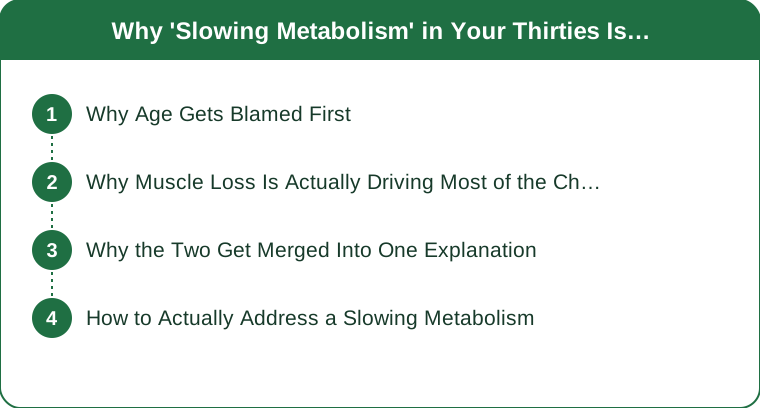
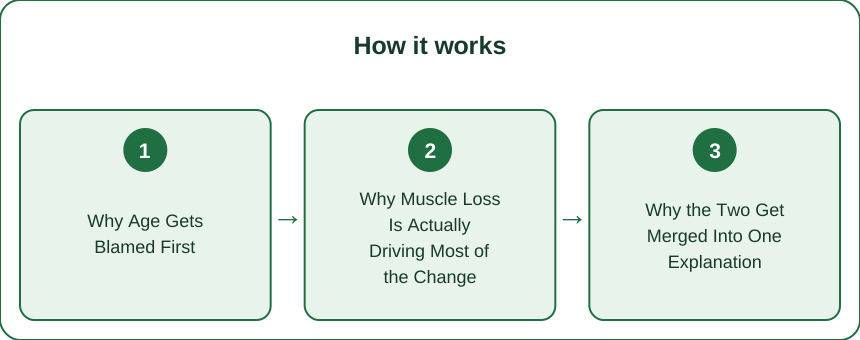
Why Age Gets Blamed First
The cultural shorthand: ‘metabolism slows down in your thirties’ being repeated so often as conventional wisdom that it becomes the default explanation the moment weight starts shifting, without examining what’s actually changed.
Why Muscle Loss Is Actually Driving Most of the Change
The physiological reality: resting metabolic rate being driven largely by how much muscle mass a body carries, since muscle burns more calories at rest than fat does, and muscle mass declines gradually when strength training and general activity levels drop off during busier decades of life.

Why the Two Get Merged Into One Explanation
The overlap: muscle loss and the passage of time happening simultaneously for most people in their thirties, since this is often when careers, parenting, and reduced free time crowd out the strength training that used to maintain muscle, making it look like age itself is the cause.
How to Actually Address a Slowing Metabolism
The practical fix: adding or maintaining resistance training two to three times a week, since preserving muscle mass is what preserves resting metabolic rate, rather than assuming the trend is unavoidable, and the frame (resting metabolism is driven by muscle mass, and muscle mass drops from inactivity, not from turning thirty — strength training is what actually protects it.)
Weight that creeps on through the thirties gets explained away as a slowing metabolism, treated as an inevitable side effect of aging. But resting metabolic rate is driven largely by muscle mass, and muscle mass declines gradually when strength training and general activity drop off during busier decades of life, not from the passage of time itself. Muscle loss and getting older happen simultaneously for most people in their thirties, which makes it look like age is the cause when reduced activity is doing the real work. Maintaining resistance training two to three times a week is what actually protects resting metabolism.
Keep Reading
This article is for general informational purposes only and is not medical advice. Always consult a qualified health professional for guidance specific to you.