What Actually Changes About Your Metabolism in Your Thirties (and What's Just a Convenient Myth)
Quick Answer: Metabolic rate does decline gradually with age, but the drop through your thirties specifically is much smaller than commonly believed — research shows metabolism stays relatively stable from your twenties through mid-forties, and most weight or body composition changes in your thirties are driven more by declining activity levels and muscle mass than by metabolism itself slowing down.
It’s the easiest explanation to reach for when things feel different in your thirties. The actual research tells a more specific, and more useful, story.

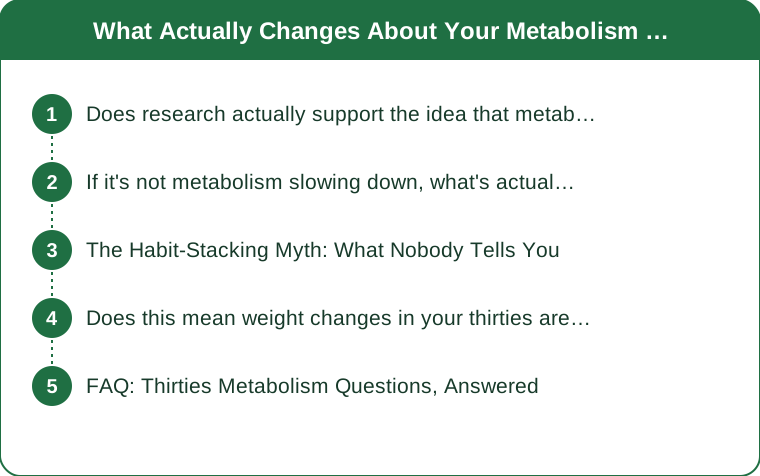
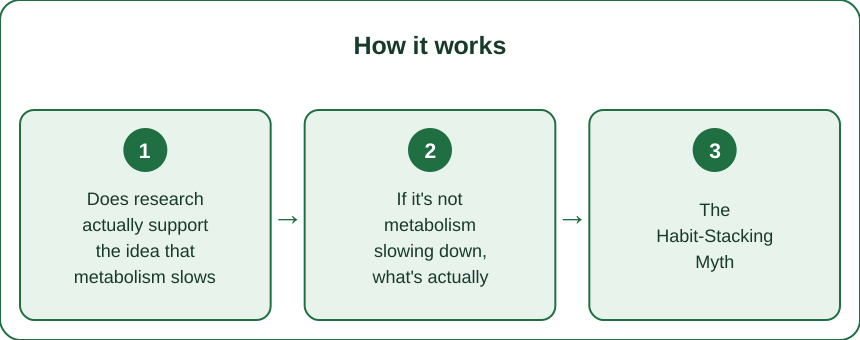
Does research actually support the idea that metabolism slows significantly in your thirties?
A major 2021 study published in Science, analyzing thousands of people across ages, found that metabolic rate remains relatively stable from about age 20 to 60, with the more significant declines occurring after 60 — directly contradicting the popular belief that metabolism drops sharply through the thirties and forties.
This doesn’t mean nothing changes in your thirties — it means metabolism specifically isn’t the primary driver of what does.
If it’s not metabolism slowing down, what’s actually driving body composition changes in your thirties?
Declining activity levels and gradual muscle mass loss (sarcopenia) are much larger contributors — many people become less physically active in their thirties due to career and family demands, and muscle mass naturally begins a slow decline without resistance training, both of which reduce total daily calorie burn independent of ‘metabolism’ in the way it’s popularly discussed.
Since muscle tissue burns more calories at rest than fat tissue, gradually losing muscle mass (rather than metabolism itself changing) can meaningfully lower total daily energy expenditure over years.

The Habit-Stacking Myth: What Nobody Tells You
A commonly repeated myth is that a complete lifestyle overhaul is needed to counteract thirties-era body changes, but since the actual driver is often activity level and muscle mass rather than metabolism, the more effective fix is usually smaller and more specific: maintaining or adding resistance training to preserve muscle mass, and rebuilding daily movement that often quietly disappears during busy career-and-family years.
This is a meaningfully smaller and more achievable ask than “fix your slowed metabolism” implies — the real target is muscle and movement, not some mysterious metabolic decline.
Does this mean weight changes in your thirties aren’t real or aren’t worth addressing?
They’re absolutely real — the point isn’t that nothing changes, it’s that understanding the actual cause (activity and muscle, not metabolic rate) points toward more effective solutions than the ‘my metabolism is broken’ framing typically leads people toward.
Resistance training specifically addresses the muscle mass component directly, which most cardio-only or diet-only approaches don’t.
FAQ: Thirties Metabolism Questions, Answered
Does having children affect metabolism directly?
Pregnancy and postpartum involve real hormonal and body composition changes, but the effect on baseline metabolic rate specifically is smaller than commonly assumed — activity level changes post-parenthood are usually the bigger factor.
Is it worth eating significantly less in your thirties to compensate?
Given that metabolism itself hasn’t changed much, addressing muscle mass and activity levels is generally more effective and sustainable than significant calorie restriction alone.
At what age does metabolism actually start declining more noticeably?
Research points to a more measurable decline generally starting around age 60, not in the thirties or forties as commonly assumed.
TL;DR:
- Major research shows metabolic rate stays relatively stable from your twenties through mid-fifties
- Declining activity levels and gradual muscle loss, not metabolism, drive most thirties-era body changes
- Resistance training to preserve muscle mass addresses the real driver more directly than diet alone
- The more significant metabolic decline research points to begins around age 60, not your thirties
Your metabolism probably isn’t the villain here — rebuilding movement and muscle is a more useful, and more achievable, target than chasing a decline that the data says isn’t really happening yet.
Keep Reading
This article is for general informational purposes only and is not medical advice. Always consult a qualified health professional for guidance specific to you.