Friendship in Your Thirties: Why It Gets Hard and How to Keep and Make Real Friends
The thirties quietly restructure friendship — the effortless proximity of school and early jobs replaced by calendars, kids and distance — and the friends kept past this decade are kept ON PURPOSE. The thirties-friendship guide: the shift, the keeping and the making.

The Shift Explained
Why it got hard: the proximity collapse (the friendships historically running on repeated unplanned contact — the school-and-office adjacency ending; the effort suddenly required where none was needed per the connection doctrine), the life-stage divergence (the friends scattering across kids-careers-and-cities timelines — the different-chapters friction; the friendship surviving divergence being a skill, not luck), the time-scarcity math (the discretionary hours collapsing in the family-and-career build years — the friendship competing with everything per the season doctrine), the loneliness honesty (the thirties loneliness being common and under-admitted — the everyone-else-has-their-people illusion per the comparison doctrine; the health stakes from the connection doctrine: the loneliness research being cardiac-serious), and the reframe (the friendship moved from default to DELIBERATE — the maintenance being the new normal, not a sign of failure per the deliberate doctrine).

The Keeping Systems
Maintaining what you have: the standing-date architecture (the recurring calendar slot beating the let’s-catch-up-soon loop — the monthly dinner, the weekly walk from the walking doctrine; the default-scheduled friendship per the ritual doctrine), the low-bar contact (the voice memos and meme-threads counting — the tiny-deposits model from the connection doctrine; the perfect-long-catchup fantasy replaced by frequent-small touches), the life-integration moves (the friends folded INTO the schedule — the errand-together, the gym-buddy from the buddy doctrine, the kids-playdate-plus-parents format; the friendship stacked onto existing life per the stacking doctrine), the divergence grace (the different-life-stage friends kept with adjusted formats — the new-parent friend met on HER terms per the season doctrine; the friendship flexing without dying), the repair willingness (the drifted friendship revived with one honest text — the ‘I miss you, coffee?’ being enough; the awkwardness surviving per the vulnerability doctrine), and the triage honesty (the energy-drain friendships audited kindly — the seasons-of-friendship reality; the core few invested in deeply per the essentialism doctrine).
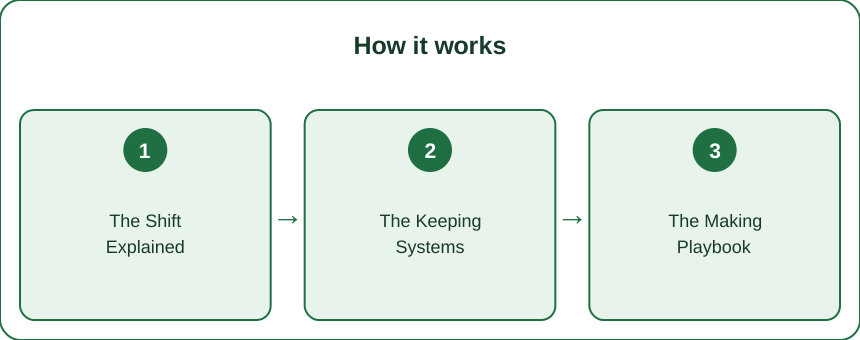
The Making Playbook
New friends as an adult: the repetition principle (the friendship forming from repeated-unplanned-contact recreated deliberately — the standing classes, clubs and groups from the community doctrine; the same-faces-weekly structures being the adult friendship factory), the venue menu (the run clubs and fitness classes from the buddy doctrine — the hobby circles from the hobby doctrine: the pottery, book club and knitting tiers; the volunteering and the neighborhood tiers; the parent-circuit for that chapter), the escalation craft (the acquaintance-to-friend move being someone’s job — the ‘we should grab coffee’ said and SCHEDULED; the first-invite awkwardness from the vulnerability doctrine being the toll everyone pays), the follow-through law (the second and third hangs cementing — the one-off coffee dying without follow-up; the new friendship needing the standing-date system immediately), the friend-of-friend leverage (the existing network’s edges — the couple-friends and group-dinner expansions), the patience calibration (the close-friendship taking months of repetition — the research’s hours-to-friendship estimates; the timeline honesty per the patience doctrine), and the closing frame (the thirties friendship as deliberate infrastructure — the standing dates, the tiny deposits, the brave first invites; the people kept being the decade’s real wealth per the connection doctrine; the loneliness, out-organized). Standing dates, tiny deposits, be the one who invites: the friendships, kept on purpose.
Thirties friendship dies of lost proximity, not lost affection — rebuild it deliberately: standing calendar dates beat ‘let’s catch up soon’, voice memos count as deposits, and fold friends INTO the schedule. For new friends, recreate repeated-unplanned-contact via clubs and classes, be the one who says AND schedules the coffee, and know close friendship takes months of repetition.
Keep Reading
This article is for general informational purposes only and is not medical advice. Always consult a qualified health professional for guidance specific to you.